Using n8n as an Application Designer — From Workflow to .NET Web API
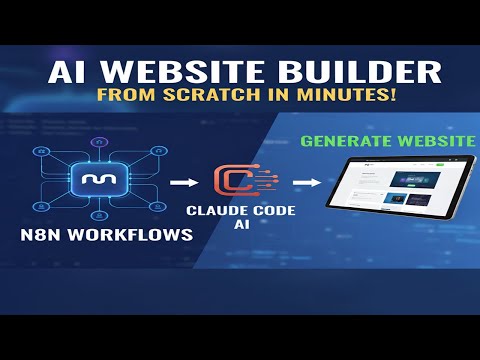
In an era where rapid prototyping and minimum viable products drive development cycles, the traditional approach of writing boilerplate code can feel increasingly inefficient. What if you could design your application visually, validate your data flows, and then automatically generate production-ready code? This video explores exactly that possibility by combining n8n's visual workflow designer with Claude Code's code generation capabilities to build a complete .NET Framework Web API application.
The Concept: Visual Design Meets Code Generation
The demonstration centers on a practical challenge faced by many developers: creating a Web API that exposes database queries through REST endpoints. Rather than starting with empty files and writing controllers, models, and services from scratch, the approach shown in the video treats n8n workflows as architectural blueprints. The workflow nodes represent API endpoints, database queries, and data transformations, while Claude Code interprets this visual design and generates the corresponding C# implementation.
The Working Example
The video walks through building an API for the Wide World Importers database, Microsoft's open-source sample database that simulates an enterprise resource planning system for an ecommerce website. Three distinct endpoints are created to expose customer information, supplier data, and top transaction records. The queries are first developed and tested directly in n8n using Microsoft SQL nodes, ensuring the data requirements are correct before any application code is written.
What makes this approach particularly interesting is how n8n's webhook nodes translate directly into ASP.NET Web API endpoints. Each webhook in the workflow becomes a controller method, with the SQL query nodes informing the service layer implementation and the data structure defining the response data transfer objects. The video demonstrates testing these webhooks with Insomnia before code generation, validating the design at the workflow level.
The Generation Process
The code generation workflow begins with establishing context for Claude Code through a markdown document that serves as a system prompt. This document defines the conversion patterns: webhooks become API endpoints, JSON payloads become DTOs, and workflow logic becomes C# classes. The exported n8n workflow JSON file provides the concrete implementation details, including SQL statements, endpoint paths, and data structures.
Claude Code processes this information systematically, generating the data access layer, service implementations, and controllers in sequence. The generated application includes proper dependency injection, configuration management through appsettings.json, and follows established .NET architectural patterns. The video shows the complete project structure appearing in real-time as Claude works through the conversion.
Real-World Considerations
The demonstration doesn't shy away from showing the reality of code generation. When the first API call returns an error due to a SQL Server geography data type that the ORM couldn't handle, the video addresses it directly. This troubleshooting moment actually reinforces the value proposition: the bulk of the boilerplate is generated correctly, leaving developers to focus on edge cases and domain-specific challenges rather than repetitive scaffolding.
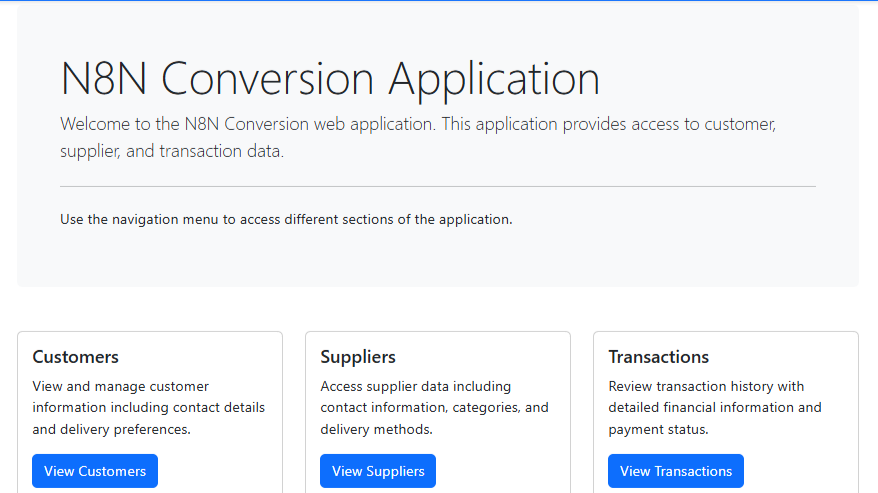
Taking the concept further, the video demonstrates generating an MVC user interface for the API endpoints with a simple prompt. Claude Code creates views with tabular layouts for each endpoint, complete with appropriate styling. What started as a visual workflow becomes a fully functional web application with both API and UI layers, all from a design-first approach.
The Broader Implications
This workflow represents a shift in how we might approach application development. n8n's extensive node library supports logic blocks, file operations, data transformations, and integrations with hundreds of services. By treating these visual workflows as specifications rather than just automation tools, developers can rapidly prototype complex applications, validate their designs with real data, and generate implementation code that follows consistent patterns.
The approach shown isn't about replacing developers with automation but rather about redirecting developer effort toward design, business logic, and problem-solving while delegating the mechanical work of translating designs into code. For teams building multiple similar applications or rapidly iterating on prototypes, this workflow could significantly accelerate development cycles while maintaining code quality and consistency.
This article also includes a full video walkthrough — an end-to-end demonstration of designing and then converting an n8n workflow to an ASP.NET application using Claude Code: